
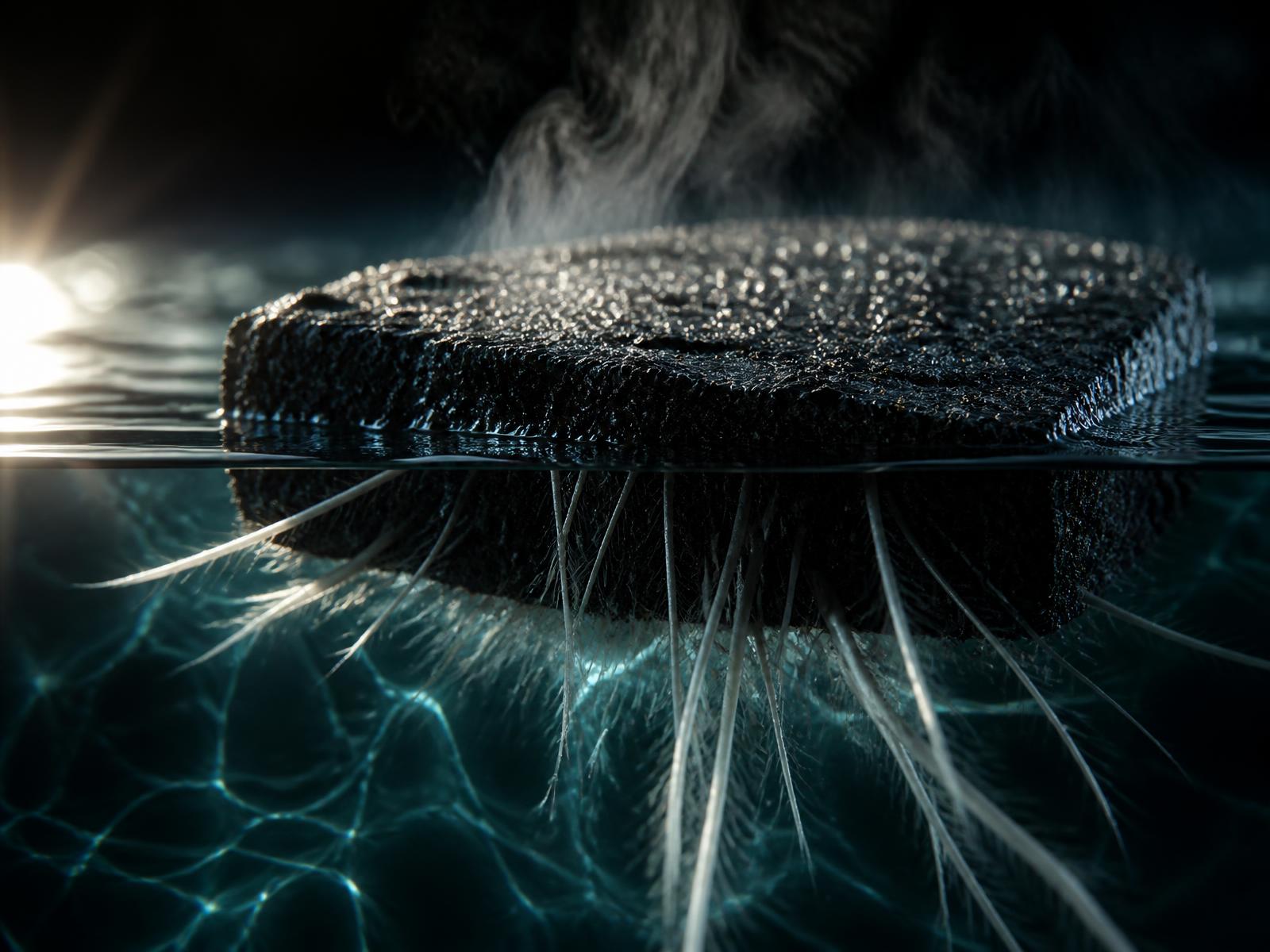
Water, unlockedby sunlight
D-SAL is a low-cost solar-driven desalination and water purification technology that uses a recyclable carbon-and-fiber structure to accelerate evaporation and produce fresh water from saline water without high-pressure pumps or grid electricity.

“About 2.2 billion people still lack safely managed drinking water, and 3.5 billion lack safely managed sanitation.”
“Water is humanity’s common denominator — central to all life on earth”
António Guterres, Secretary-General of the United Nations, July 2026, at the UN High-Level Political Forum
Artistic cyanotype editorial interpretation of a publicly available UN photograph, reproduced for context on the global water challenge. D-SAL has no affiliation with the United Nations, and neither the United Nations nor António Guterres endorses D-SAL or its products.
D-SAL: Sunlight into fresh water
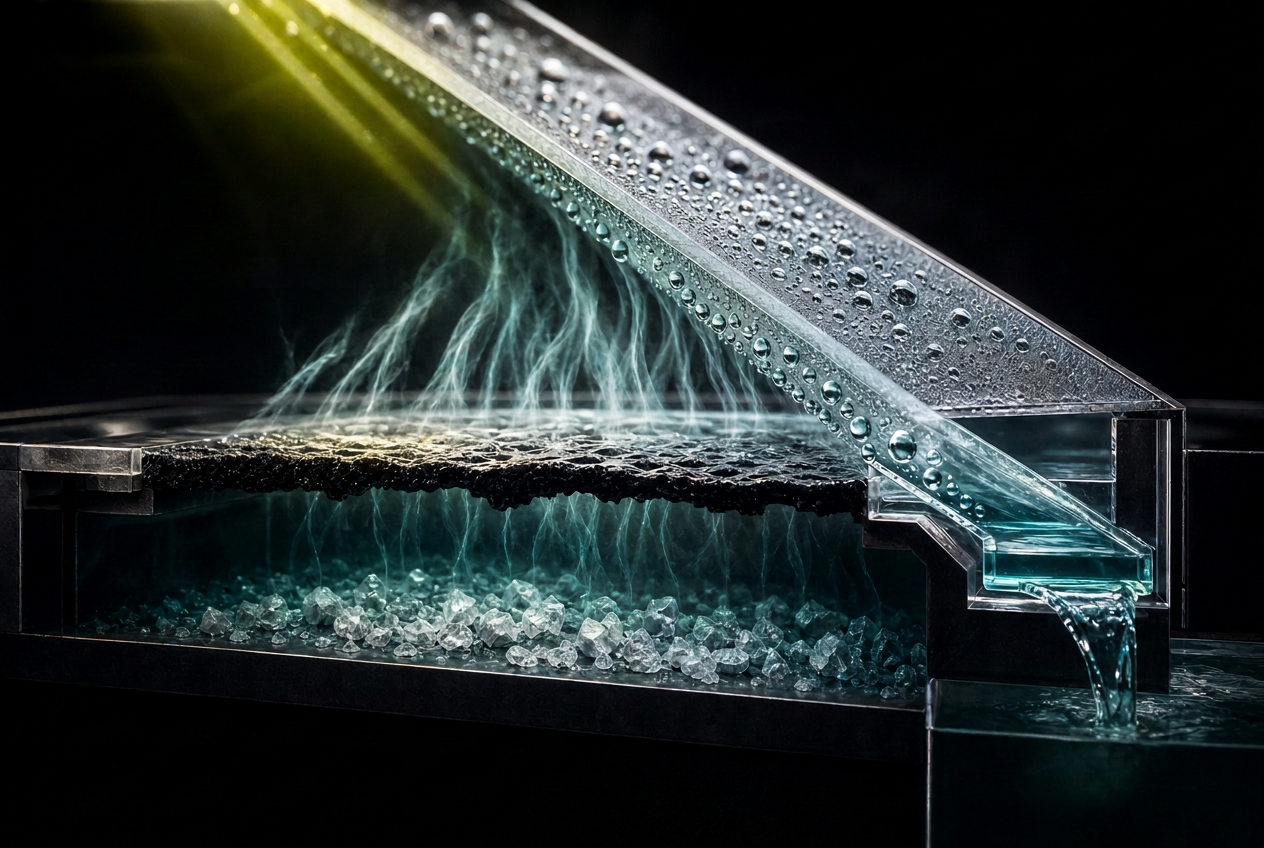
Sunlight
The only energy input
Vapour
Evaporation at the interface
Floating carbon layer
Captures light across the solar spectrum; water reaches the surface by adsorption and evaporates from all exposed faces
Fresh water
Condenses on the cover
Brine
Salt stays below the layer
D-SAL yield
12–15L / day / m²